Records
Signatures that stay with the data they signed
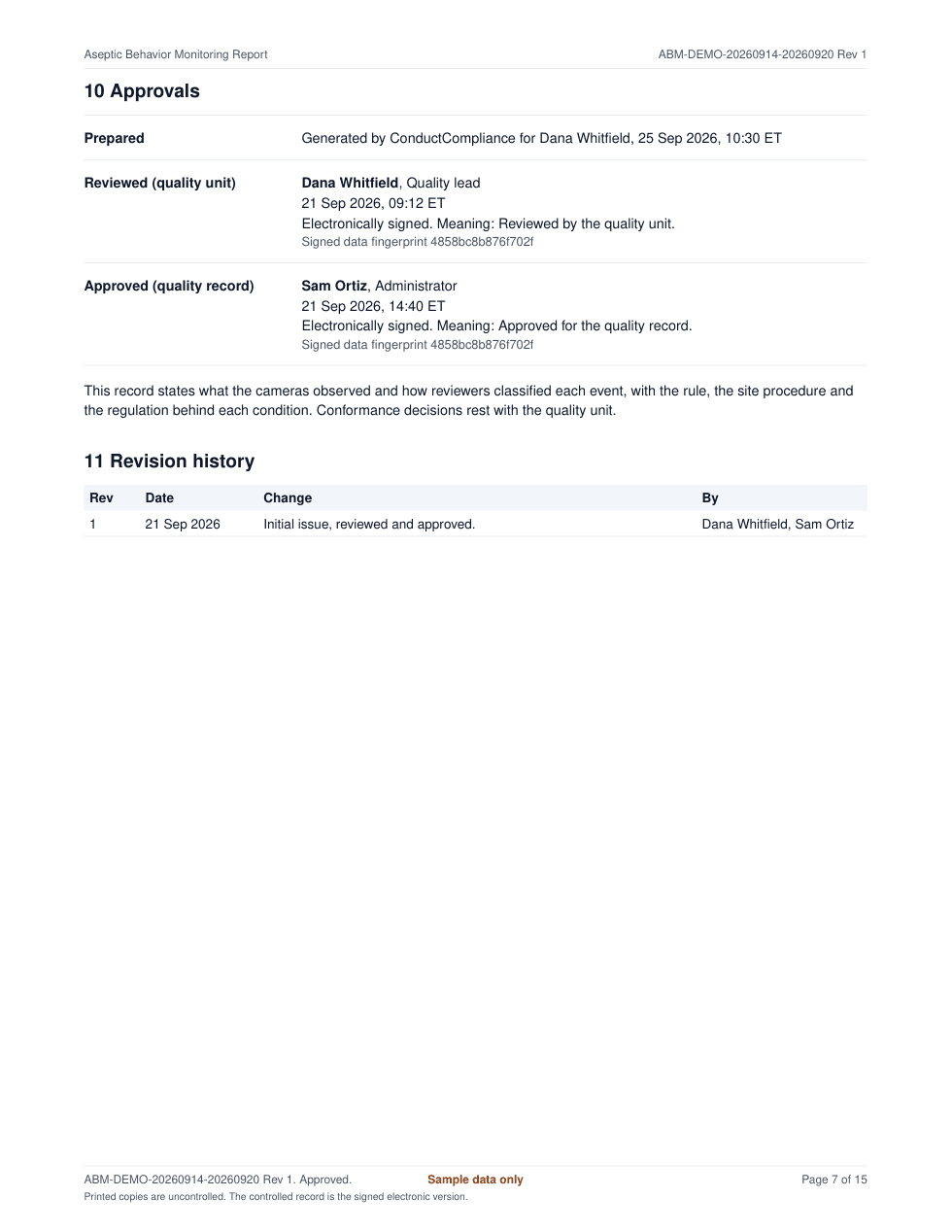
Reports get a quality review signature, then approval by a second person. Each signature shows the name, date, time and meaning, and changed data starts a new revision.
Why it matters
What a signature must show, and what it must stay with
Part 11 and Annex 11 ask that each signature shows who signed, when and why, and stays linked to the record it signs.
“Signed electronic records shall contain information associated with the signing that clearly indicates all of the following: (1) The printed name of the signer; (2) The date and time when the signature was executed; and (3) The meaning (such as review, approval, responsibility, or authorship) associated with the signature.”
“Electronic signatures and handwritten signatures executed to electronic records shall be linked to their respective electronic records to ensure that the signatures cannot be excised, copied, or otherwise transferred to falsify an electronic record by ordinary means.”
“Electronic records may be signed electronically. Electronic signatures are expected to: a. have the same impact as hand-written signatures within the boundaries of the company, b. be permanently linked to their respective record, c. include the time and date that they were applied.”
The rules
What the software enforces
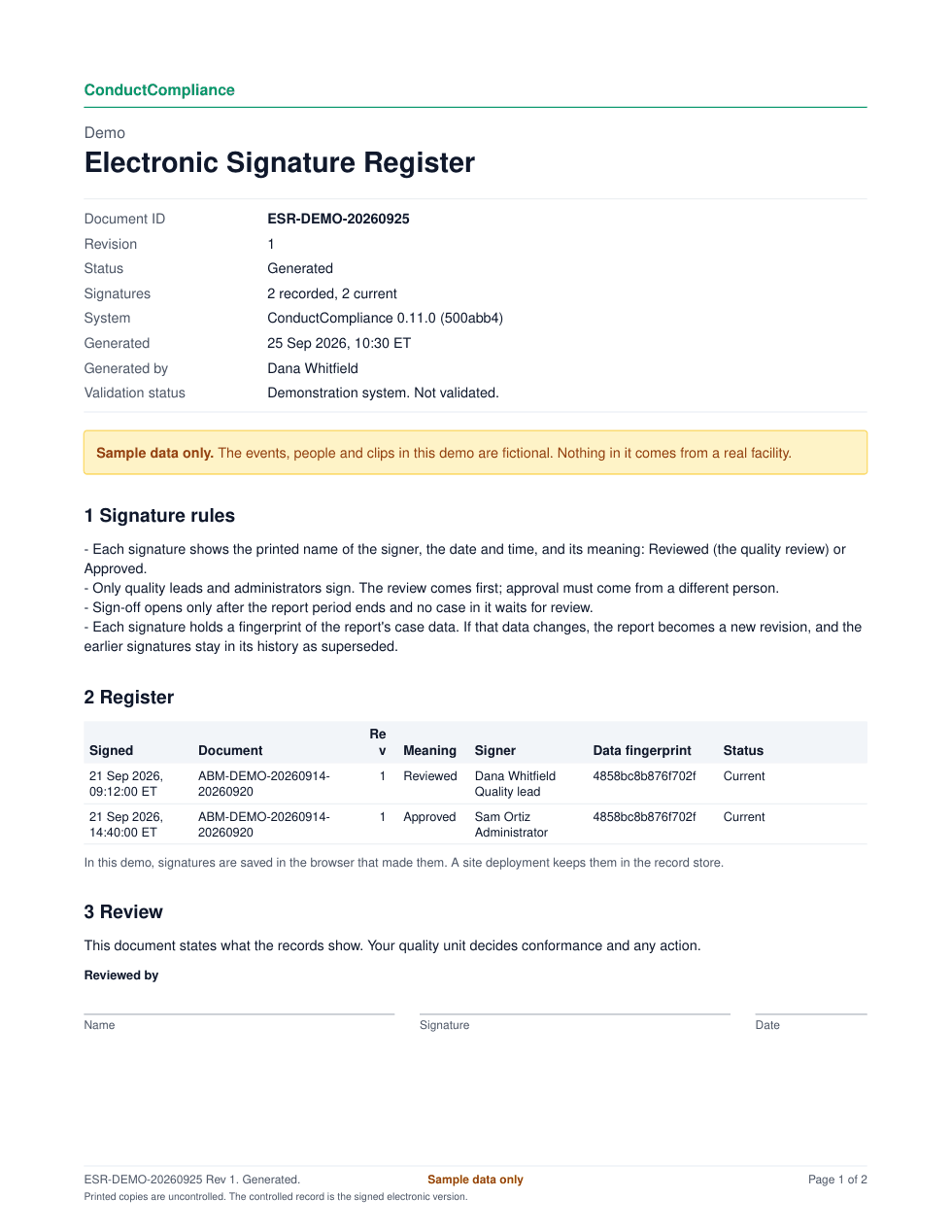
- Each signature shows the printed name of the signer, the date and time, and its meaning: Reviewed (the quality review) or Approved.
- Only quality leads and administrators sign. The review comes first; approval must come from a different person.
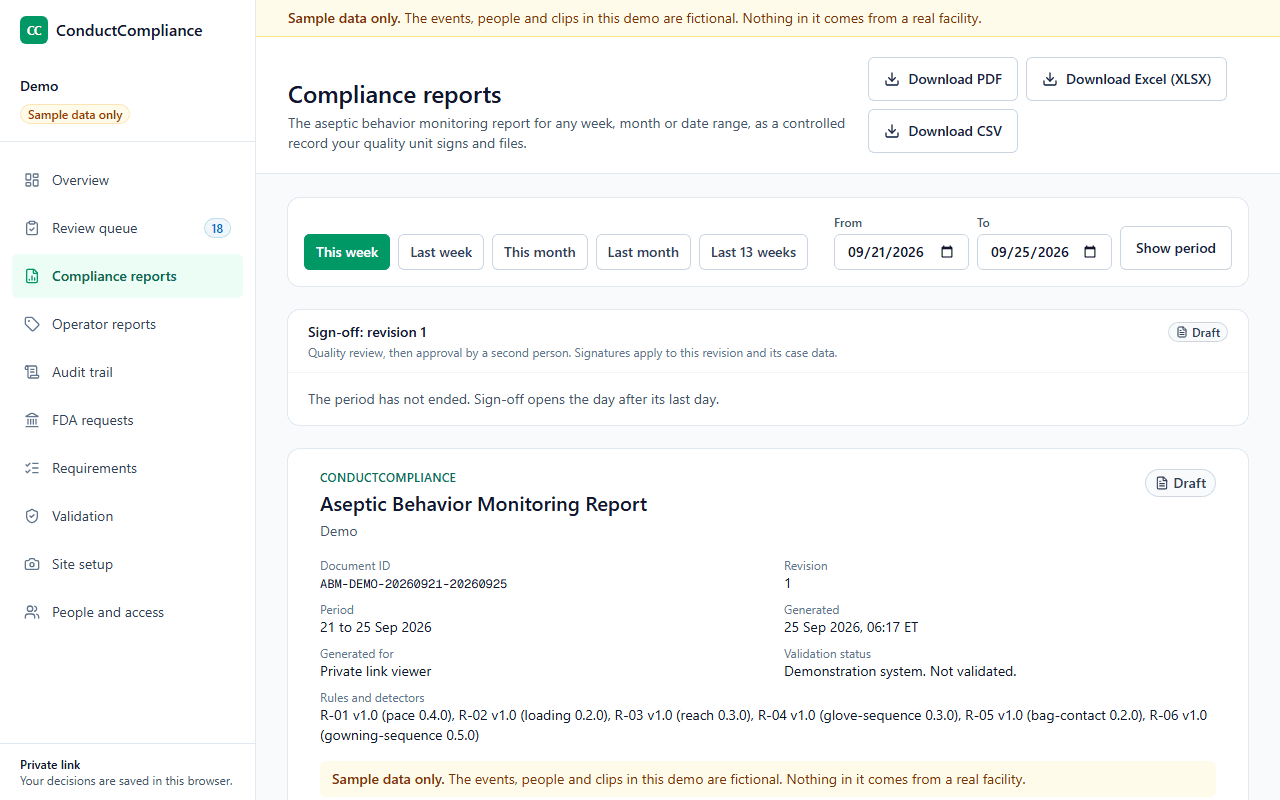
- Sign-off opens only after the report period ends and no case in it waits for review.
- Each signature holds a fingerprint of the report's case data. If that data changes, the report becomes a new revision, and the earlier signatures stay in its history as superseded.
GMP workspace, sample data
When data changes
A late decision starts a new revision
Signatures cover the data they signed. If that data changes, the old signatures no longer count for the new numbers.
Sign
Each signature stores a fingerprint of the report's case data at the moment of signing.
Data changes
A new decision on a case in the period changes the fingerprint.
New revision
The report becomes the next revision, back in draft, ready to sign again.
History kept
The earlier signatures move to the revision history and show as superseded.
Signature register
Every signature in one register
The electronic signature register lists each signature with its meaning, signer, time, report, revision and data fingerprint, and whether it is current or superseded. It comes as PDF and Excel.
Who does what
Rules in the software, accountability with your people
The software
- Shows the printed name, date and time, and meaning on every signature
- Requires review before approval, by two different people
- Binds each signature to the data it signed
- Keeps superseded signatures in the revision history and the register
Your team
- Decides who holds the quality lead role
- Keeps a written policy that holds people accountable for their signatures
- Certifies electronic signatures to FDA
- Reviews the signature register on a schedule
Questions
Common questions
- Can one person review and approve the same report?
- No. Approval must come from a different person than the reviewer, and both must hold the quality lead or administrator role.
- When can a report be signed?
- After its period ends and no case in it is still waiting for review. Until then the sign-off panel says why it is closed.
- What happens to signatures when a late decision changes a report?
- The report becomes a new revision that needs signing again. The earlier signatures stay in its revision history and show as superseded in the signature register.
- How do signers prove who they are?
- In a site deployment, people sign in with their own accounts from your identity provider and enter their user ID and password at each signing. In the demonstration workspace, signers type their name.
- Do we need to tell FDA that we use electronic signatures?
- Yes. Part 11 asks companies to certify to FDA that their electronic signatures are the legally binding equivalent of handwritten ones (21 CFR 11.100(c)). Your regulatory team sends that certification.
See it with sample data
We show the review queue, a signed monitoring report, the audit trail review and the validation package, then answer your team's questions.